Categories
A New Beginning
I have been to hell and back. And let me tell you, it was wonderful.
Louise Bourgeois
Learning to Begin Again
There is a peculiar grief that comes with watching the life you built slowly disappear. It is not always dramatic. Sometimes it arrives quietly, through the end of a decades-long marriage, the realization that the future you imagined no longer exists, and the unsettling silence that follows.
For years I believed endurance alone would be enough. Then cancer interrupted everything—not once, but twice. Illness has a way of stripping away every illusion of certainty. It teaches you that the body is both remarkably fragile and astonishingly resilient. Recovery is never simply about surviving disease; it is about discovering who remains when so much has been taken away.
When my marriage ended, I found myself moving just one hundred miles from where I had been, yet emotionally it felt as though I had crossed an ocean. I returned to the city where I was born, but it was no longer the place I remembered. Familiar streets became unfamiliar landscapes. I was forced to become a beginner again—not only in life, but in belonging.
Art became my compass. My inner circle became my root.
For decades I had worked with materials I understood, developing techniques through years of experimentation. Yet beginning again demanded something different. It required humility. I found myself fumbling through unfamiliar processes, failing repeatedly, questioning whether I still possessed the ability to make meaningful work.
Failure can be a lonely place. Every unsuccessful experiment whispers that perhaps your best work is behind you.
It was during this uncertain season that love became one of the greatest creative forces in my life.
My partner never tried to make the work for me. Instead, he offered questions instead of answers, possibilities instead of conclusions. He encouraged me to explore technologies and artistic approaches I had never imagined using. When I became frustrated, he reminded me that every artist who has ever broken new ground first had to be willing to make something imperfect.
His greatest gift was not technical advice but unwavering belief that I could follow the process instead of it follow me.
When I wanted to abandon a failed experiment, he encouraged me to look again. When I insisted something could never work, he suggested another path. He celebrated curiosity more than success, reminding me that discovery rarely arrives fully formed. It emerges through persistence, play, and the courage to continue after disappointment.
Through his encouragement I immersed myself in entirely new artistic practices. I stopped asking whether I could master them and began asking what they might teach me. The unfamiliar gradually transformed from something intimidating into something exhilarating.
Art immersion became more than learning new techniques. It became an act of healing.
Each experiment represented another declaration that my story was still unfolding. Each new material carried the possibility that transformation belonged not only to the artwork but also to the artist creating it. I began to understand that reinvention is not a betrayal of one’s past; it is often its natural continuation.
Looking back, I no longer see the end of my marriage, loss of important relationships, my battles with cancer, or my relocation as isolated hardships. Together they dismantled a life that could no longer contain who I was becoming. What initially felt like loss eventually became space—space to rediscover wonder, embrace vulnerability, and create with a freedom I had never known before.
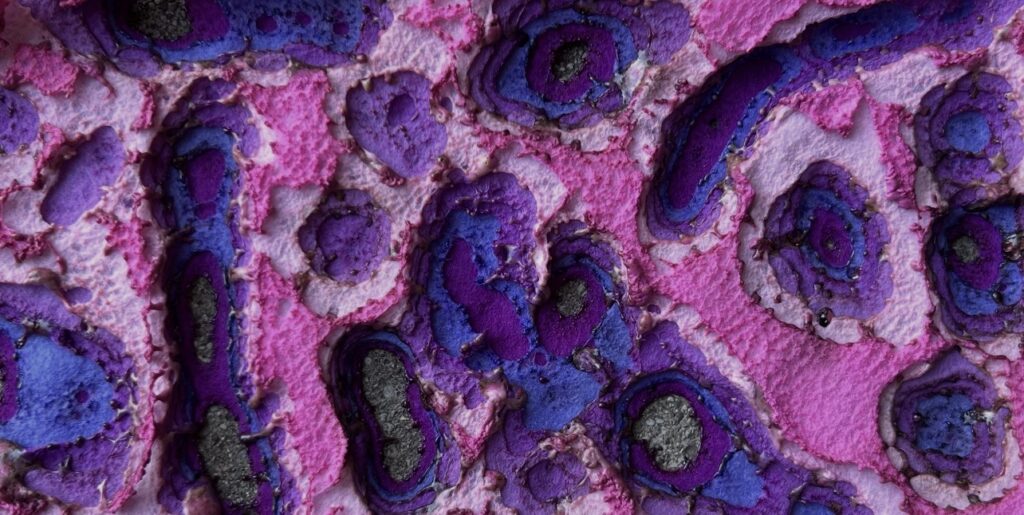
Today my work carries traces of every chapter: survival, heartbreak, resilience, environmental consciousness, memory, and hope. The layers within each piece mirror the layers within a life rebuilt from fragments.
The greatest lesson has been that beginning again is not evidence of failure. It is evidence of courage.
Sometimes the most extraordinary creative breakthroughs do not emerge despite our deepest losses. They emerge because we survived them—and because someone believed in us long enough for us to believe in ourselves again.
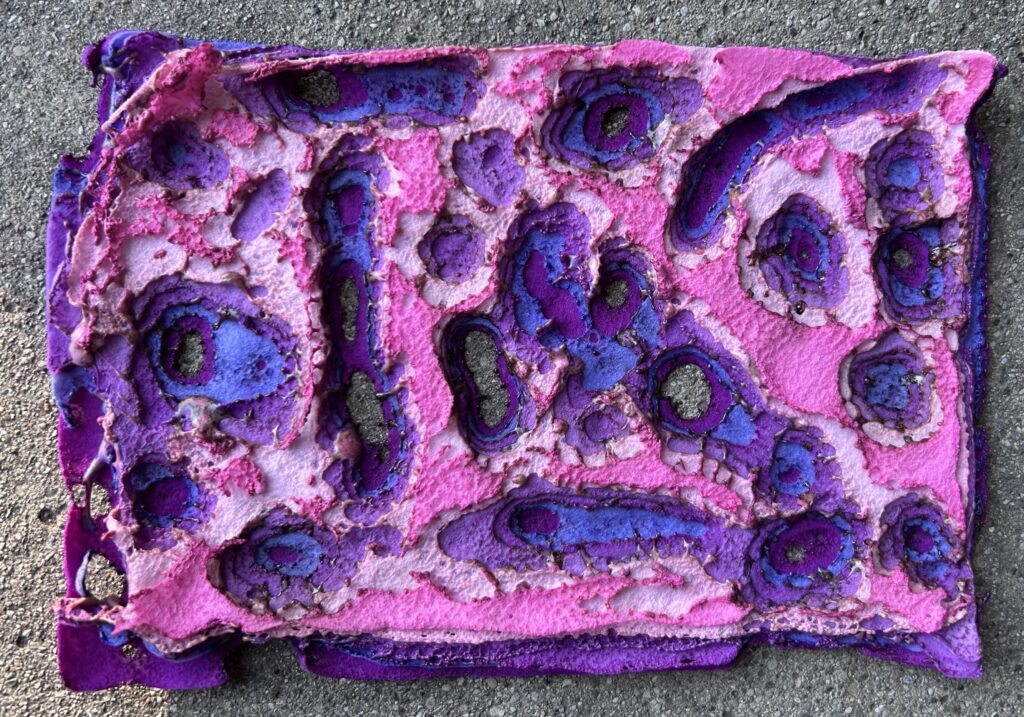
This season was like a corset
Crowding bone and emotion
Squeezing blood and screams out
Praying for mercy in an empty room
Breath and faith, breath and faith
This season is like a corset
Crowding bone and emotion
Squeezing blood and screams out
Praying for mercy in an empty room
Breath and faith, breath and faith
Van Luong (1)
 Kjell Zillen (4)
 Mels Dees (9)
 Gao Yu (4)
Katya Lebedev (1)
Juan Dies (1)
 Anastasia Prahova (2)
Nena Nastasiya (7)
Taarn Scott (6)
 Cynthia Fusillo (20)
Roberta Orlando (8)
 Nanda Raemansky (25)
 Eliane Velozo (22)
Leyya Mona Tawil (1)
Julia Dubovyk (2)
Jianglong (2)
 Iara Abreu (23)
 Agathe Simon (1)
Rosetta Allan (1)
Elizaveta Ostapenko (5)
 Valentin Boiangiu (2)
 Wesley John Fourie (9)
 Renato Roque (3)
Rosa Gauditano (5)
Neerajj Mittra (34)
Ciana Fitzgerald (5)
Boris Moz (3)
 Katerina Muravuova (5)
Kyla Bernberg (1)
 Muyuan He (1)
Liza Odinokikh (2)
 Amalia Gil-Merino (2)
Paulo Carvalho Ferreira (6)
 Anastasiia Komissarova (2)
 Yumiko Ono (1)
 Stefania Smolkina (1)
Lena Adasheva (1)
 Zahar Al-Dabbagh (1)
 Emily Orzech (6)
 Fernanda Olivares (5)
 Noor van der Brugge (3)
 Ira Papadopoulou (2)
 Tom Chambers (8)
 Titi Gutierrez (3)
 Franz Wanner (2)
 Crystal Marshall (6)
 Transpositions III (36)
 Riddhi Patel (3)
 Michele Kishita (2)
Damian Carlton (4)
 Deanna Sirlin (1)
 Laura Salerno (3)
 Nina Annabelle Märkl (12)
 Elina Fattakhova (1)
 Tasha Hurley (1)
 Ian Hartley (2)
 Laurence de Valmy (2)
 Ilia Bouslakov (5)
 Andrea Ahuactzin Pintos (4)
 Sveta Nosova (3)
Carlos Carvalho (1)
 Maria Timofeeva (1)
 Jinn Bug (2)
 Johannes Gerard (3)
Irène Mélix (1)
 Aba Lluch Dalena (3)
 Fabian Reimann (1)
Natalia Gourova (1)
 Kate Finkelstein (4)
Raina Greifer (1)
James McCann (2)
Naza del Rosal Ortiz (1)
 Jay Critchley Jay Critchley (1)
 Vicky Clarke (4)
 Maria Silva (4)
 Shir Cohen (5)
 Peter Shenai (4)
 Bo Choy (4)
Alina Orlov (2)
 Olga Popova (3)
 Coco Spencer (2)
 Filippo Fabbri (2)
Daniele Leonardo (5)
 SISTERS HOPE (1)
 Scenocosme : Gregory Lasserre & Anais met den Ancxt (4)
 Anne Fehres & Luke Conroy (6)
 Olesya Ilenok (2)
 Marie-Eve Levasseur (4)
 Natalia Tikhonova (2)
Ildar Iakubov (1)
 Evgeniy Lukuta (7)
 Jarkko Räsänen (5)
Maria Guta (6)
Egle Kulbokaite Dorota Gaweda (6)
Thomas Kotik (1)
 Andrea Stanislav (3)
Ludmila Belova (1)
Alena Levina (1)
 Ilia Symphocat (2)
Yevgeniy Fiks (1)
 Star Smart(Formerly Trauth) (19)
Jyoti Arvey (1)
Les Joynes (2)
 Ekaterina Ivanova (1)
 Lev Shusharichev (1)
Michael Stebackov (5)
Ryan Griffith (3)
Lidia Gordeenko (3)
 Masha Danilovskaya (7)
 Irina Korotkaya (2)
 WagtailFilms Oksana Bronevitskaia&Dmitry Zhukov (5)
Kostya Diachkov (1)
Elena Sokolova (3)
Alexander Nikolsky (2)